04 February, 2011

Angkor What?


It’s time to check out Siem Reap. We rose early and decided today was cooking class day. Well, I’d have to say it was the best meal we’d had since being in Cambodia. The cooking classes are all run by restaurants. The chef took four of us (Carol and I and an older Canadian man and a girl from Hong Kong) to the local market to learn what all the ingredients in our dishes were.  I was making a mango salad and fish amok. It was the most local market we’d been to. There were crazy looking monk fish that can survive on land and they were wiggling around. We saw whole pig heads, weird and wonderful fruit and bags and bags of spices including a huge bag of saffron which was a couple of dollars – surely it wasn’t pure saffron? The smells range from delicious jasmine and musky incense to raw fish and what smells like a tip. The heat (36 degrees) also makes everything more pungent. 


My mango salad

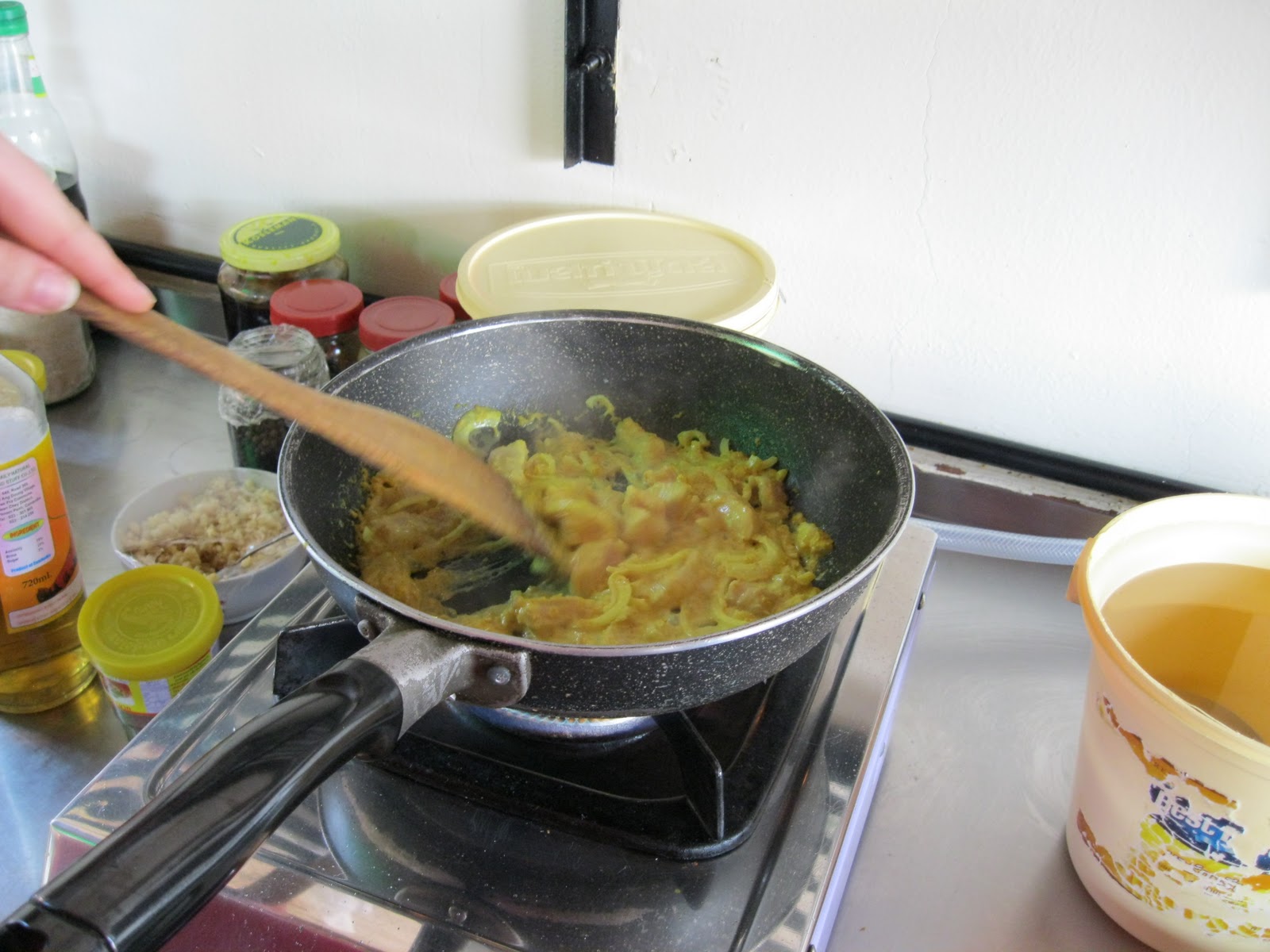
Stirring the fish amok

The class standing very proud


After the market we went up two storeys above the restaurant to a small kitchen equipped with everything we needed. We did everything from scratch and got to learn how to make everyone else’s dishes as well. Now I know how to make a kick-ass fresh spring roll sauce and paste for any amok recipe – just need a pestle and mortar. For mango salad they use green mango and grate it. For dessert we were all going to share coconut custard steamed inside a hollowed out pumpkin, but we forgot about it and the pumpkin totally split so it wasn’t quite right, but still tasty. Khmer people eat their desserts and drinks very sweet so we halved the amount of sugar! A lot of menus specify ‘no sugar’ for that reason. We had to make both courses before we could eat – it was so hard seeing my mango salad there and not being able to hoe in. We all tasted each others and gave the instructor our email addresses to get the recipes – delish. 

Our instructor with the pumpkin custard disaster
After the cooking class we walked up to the Angkor National Museum. I really wanted to see it but was a bit annoyed at having to pay US$12 for admission – more than a day tour or almost three nights accommodation. I had read good things about it so off we went. For the size and professionalism of the museum it was pretty much empty and this is the busy season. There was a really cool space where you could put on traditional Khymer clothes, hold props and stand in front of scenes in Cambodia – rice patty fields, fishing villages etc. The museum tells stories about Angkor’s history, culture, religion and political situation. It was good visiting before the temples because we had a good background, even if it was a lot to take in. On the way back from the museum we checked out an art and craft market. The quality of the goods was much higher than the local markets and it had a real environmental awareness feeling; they even had rubbish bins. I’m just shocked at the lack of rubbish bins here. We’ve seen so many locals throwing plastic bottles on the ground and in the river. It’s quite funny because they sweep like crazy and then burn the rubbish on the side of the road and outside their homes. In touristy places there are rubbish bins, but not anywhere else.


Angkor National Museum

Grounds of a beautiful monastery on the way to the museum

Monastery again


After trying to pack a lot of information into our tired brains at the museum we headed out for a drink on Pub Street – the main tourist/restaurant street in Siem Reap. Cocktails range from $1.50 - $3.00 and beers start at 50c. I had a cuba libre and decided it was best to stick to beer. It was clear they’d used local rum and the coke wasn’t fizzy. We bumped into Lee from our cooking class and she joined us for dinner at Angkor Palm Restaurant. We shared a few dishes; sweet and sour chicken, fish cakes and a yummy soupy thing and then we headed back to the guesthouse for some R & R.

The next day we hired bikes and headed for the temples. There are two tracks that cover the main temples and then you can explore temples further afield as well. For the first day we’d planned to ride the small track. After getting our three-day pass (US$40) issued (with ID photo and all) an Austrian girl approached us asking if we’d like to share their tuk-tuk and tour guide. We said yes please, but it wasn’t that simple! After about 20 minutes of negotiating with the tour guide, tuk-tuk driver and a few policemen, four of us got on the tuk-tuk and the Austrian chap and tour guide rode bikes. For the tour guide and ride it cost US$11 each – excellent. Angkor Wat was absolutely incredible and I didn’t really understand what I was seeing until reflecting on it later and looking through the photos. It’s the largest religious structure in the world and is the most famous of all the temples. Angkor Wat was built by Suryavarman II (1113-50) and the temple is dedicated to the God, Vishnu. It’s so hard to fathom the age of it. An estimated 300,000 people built it, taking almost 30 years.

Angkor Wat

Bas relief 

The crew

We were lucky to see some Apsara dancing being filmed in Angkor Wat for the King

The steps to the top we closed off

No pregnant woman allowed - Te Papa aint that different!


The second temple for the day was Bayon which is one in the ‘city’ of Angkor Thom. Angkor Thom was built by the greatest Angorian king, Jayavarman II (1181-1219) and was inhabited by about I,000,000 people when London had a population of about 50,000. This temple is really decorative and its bas reliefs are very special, depicting everyday life in 12th century Cambodia. It’s hard to belive Cambodia was such a prosperous and wealthy country. When we were there work was being done in partnership with the Indian government. The Terrace of Elephants is also part of Angkor Thom and was where the king and public would watch all sorts of processions and ceremonies. The final temple for day one was the one from the Angelina Jolie film, Tomb Raider. The trees have completely overtaken the structure destroying it and supporting it. Unlike the previous temples this one is being left untouched so visitors can understand the different stages and natural deterioration of the holy sites.

Example of different approaches to restoring the temples

Bas relief at Angkor Thom


Ta Phrom

Our new German friend at Ta Phrom

Ta Phrom


IIt was Friday night and we’d had a big day so after a freshened up we headed into town. With a variety of bars to choose 50c beers from we did some barhopping. We headed to a rooftop bar we’d heard about that had a half pipe on the top. It was pretty dead but fun to look down on Pub Street and the goings-on. Angkor What? was the first bar in Siem Reap so we thought that deserved to be checked out. It was definitely cheap and the backpacker place to be with absinthe and red bulls. Again, we stuck to beer! The beggars went to a whole new level tonight with children under the age of ten holding babies that looked like they’d been drugged and bottles asking for money.

Waking up after a later than usual night we decided to spend a day chilling out at the guesthouse catching up on our diaries and making a few bookings for the next week.

The second day at the temples was more adventurous. We got our own tuk-tuk driver (who wasn’t the usual friendly sort) and went further afield. Preah Neak Pean sounded interesting because it had a large pool surrounded by four smaller ones. Before this we’d only seen a single mote. This wasn’t nearly as dramatic as what we’d seen but it was interesting to see the comparisons between kings. Banteay Srei (construction began AD 967) was my favourite. It’s a Hindu temple dedicated to Shiva and is made from red sandstone, so is a pretty pink/ochre colour. The carvings were so intricate and beautiful, for it to have stayed in this kind of condition is extraordinary. The lintels and columns are covered with gorgeous geometric designs. Banteay Srei wasn’t as busy as Angkor Wat but had a very professional visitor and interpretation centre and a gift shop (as well as the usual rip-off tourist restaurants) which none of the others have. The interpretation centre was fabulous and great to get a real sense of the timeline of temples and what was being done now to preserve them, or not.  Going to Preah Ko next was such a contrast. Preah Ko is a Roluos Temple and is one of the earlierest. It was built in the 9th century and has some of the best examples of surviving plasterwork. The towers are made from small bricks which also made a change to the stone structures we’d seen.

Preah Neak Pean

Bas relief at Preah Neak Pean

Me at Banteay Srei

Banteay Srei

Banteay Srei

Interpretation centre at Banteay Srei


Example of plasterwork at Preah Ko

Preah Ko


That night we had BBQ frog for dinner. I have a real issue with eating things that can be identified as the animal, so I let Carol do the dissection which took me back to walking out of 3rd form science. We gnawed on the legs first and then tackled the upper body and arms. It was surprisingly tasty, a combination of fish and chicken and for US$1 we thought, why not?

Mr. Froggy
Me nibbling on Mr. Froggy's upper leg

We had to get up early for the bus to Phnom Penh and were lucky to make it because it turned up an hour early. We really thought we were starting to nail the transport, but there’s always a surprise. Mekong Express was all we’d hoped for and more. They had an English speaking tour guide who informed us how long the trip would be, how long we had at stops and a little bit of history along the way. We got water and yummy pastries as well as cleansing wipes. What a difference! We arrived in Phnom Penh before schedule and our guesthouse in was a 20 minutes to the river (main part of town), but it took us an hour going through some real slum areas of the city to get there. The smells were worse than Bangkok; rubbish, sewerage and some smells I couldn’t identify. After a random man reached out and rubbed me on the way into town I thought a tuk-tuk home that night would be safer.


There are lots of sights, smells and sounds that I’ll always remember about Cambodia. Among them are: children doubling their siblings to school on bikes, land mine victims begging and selling, woman burning rubbish and sweeping streets, lemon grass, jasmine, tuk-tuk drivers asking if I’d like a ride, women in pyjama suits during the day and men sitting on motos (motorbikes) smoking.


28 January, 2011

Lady, you need a tuk-tuk?

The day after our tour in Kanchanaburi was pretty chilled out, so nothing really to report. We checked out the nightlife that evening and got a free tuk-tuk ride from a guy who we met the day before. He was really into reggae and has it playing from his tuk-tuk. We went to a cute wee bookshop restaurant for dinner and met some nice people from Holland. I had ginger chicken and it was served with delicious, aromatic, blue rice.  They had board games so I taught Carol how to play speed scrabble.

Blue rice and my pick of beer so far - Chang

The next day we caught a ‘bus’ to Bangkok. It was the funniest trip ever and taught us a few lessons about public transportation in Southeast Asia! To start with it was what we call a mini-van. We looked in the door and it was what we’d consider full and we wondered how on earth the two of us and our packs would ever fit in. We were told to sit right down the back and our packs would go in the aisle. After accepting that and thinking at least we’d have a bit of leg room we picked up a guy from Holland and four others from Australia! By this stage all the non-Thai people on the bus were in hysterics when the driver threw a guitar down our way as well! I don’t think I’ve ever sat so close to a complete stranger in my life. What made the trip worse was the Thai pop music. It didn’t stop there because then the driver dropped down a wee TV so we could also watch the video – perfect. At the half way point we also discovered there was a baby on board and we could have sworn he was born on the bus!

Getting dropped of near Khao San Road wasn’t quite as manic as I was expecting. We’d booked our hostel so we just had to find it! It was a couple of streets away from Khao San Road with food stalls and markets right outside. Here I had the worst meal of the trip so far. We went to a touristy restaurant that also did a lot of Western food and I went for the vegetarian Phat Thai. It tasted like they’d added a tin of tomatoe sauce to the noodles – it was disgusting. Washed that down with a Chang and headed for the markets. They were amazing and I could have gone crazy, but am really conscious of the next three weeks with 20kg on my back and the move to the UK, so held back. Highlights were the bookstalls, clothes and street food. We did a bit of bar hopping that night and checked out a break dancing competition which was really cool. On our way home we got a gorgeous 30 minute massage which put us to sleep.


Us with the packs

Worst meal to date

Street food off Khao San Road, Bangkok

Break dancing comp

Bugs!


It was an early start to fly to Ho Chi Minh City to get on a bus to Chau Doc and then catch the boat to Phnom Penh. I’ll sum my experience of Ho Chi Minh City up like this: dirty, unpleasant, no one spoke English. It’s like they are complete tourist haters! The amount of taxi drivers that hassle you at the airport was mental – much worse then what we experienced in Thailand. After almost getting majorly ripped off by several taxi drivers we boarded a bus into the main part of the city where we had to get another bus to the bus station our Chau Doc bus was leaving from. We had no idea what time it went so were hoping it was pretty regular or we would make it in time. We made it with 30 minutes to spare. Again the ‘bus’ is actually a mini-van and there are two other tourists on it – also from Holland (we've met lots of Dutch people so far). These two really saved our bacon. By the time we got to Chau Doc it was dark and we hadn’t booked anywhere to stay. No one spoke English so we followed the Dutch couple and we all stayed at a hotel (rather flash for us backpackers, but after that hideous trip we totally deserved it).

View from outside our hotel. Chau Doc, Vietnam. 


The boat trip the next day was the highlight of the trip so far for me.  Seeing how people live on the river and how they fish was incredible. It was also very beautiful and what I imagined Vietnam to be like. After the Ho Chi Minh City experience this was a relief!

Some people fishing on the river

Lots of these houses on stilts along the river


I love Phnom Penh. After being hassled by tuk-tuk drivers getting off the boat, one very smooth driver showed us to a cafĂ© where we could gather our thoughts and decide where to stay. Unless you’ve got something booked it’s very hard to get away from them because they offer you lots of different things and suggest places you can stay – very overwhelming, especially after the peaceful six-hour boat ride.  Our tuk-tuk driver took us to a central hotel and then drove us to the killing fields, Tuol Sleng Museum and to an orphanage. I can’t describe in words what being at the killing fields felt like. No one speaks and the silence is chilling. The museum on site was very informative and I don’t think the video in the theatre has been updated since the 1980s. Tuol Sleng Museum is inside Security Prison 21 (S-21) which was formerly a highschool. During the Khymer Rouge regime it was used to interrogate and torture people. It was made up of two different types of exihibits. There were thousands of photos of the faces of victims which was just horrific and made the whole thing much more real. The other rooms were empty apart from bed bases with different torture instruments on them and a single photo of someone being tortured on one wall - haunting.

The orphanage put a more positive spin on the day. We took a 50kg bag of rice for them that will sustain them for a few days. There were 17 children in total. They were all gorgeous and it was so hard saying goodbye. Two of them don’t have parents and the rest are there because their parents are very poor or are substance abusers. We hope to spend some more time with them on the way back to Vietnam. The orphanage has a blog which the director updates daily with photos and information about what the children are up to. They often have volunteers teaching English but no one can stay long so it’s hard for the children. The director is an orphan himself, and his wife and two children live at the orphanage (he is the one in the wheelchair in the photo below - it's a terrible photo). 

At the orphanage - terrible photo, sorry


As soon as we left the orphanage Arnie, our driver suggested he take us out for a few jugs of Angkor and some BBQ beef. We were a bit weary about going somewhere really local but we bit the bullet and did it! As we approached the restaurant I noticed two huge cows on spits – that was dinner. Arnie’s fried Ty joined us and then we jumped on the back of their motos and went to a club to dance. There was strict security (it was of course a Monday night!), about five people with torches checking bags and patting us down. My camera was taken out and I could collect it when we left, they were also very suspicious of my tampons and weren’t going to let me take them in. Then the woman came over and knew what they were and allowed it – it was very funny. After some boogying to Mary J Blige, Usher and Dr. Dre the guys dropped us back at our hotel, not before trying to sneak in another jug somewhere – I don’t think so!


Cambodian BBQ beef. Seems like their national dish - scrumcious
Out to dinner with very friendly tuk-tuk driver


We slept in on Tuesday as we were a tad under the weather after our first big night out. We grabbed some breakfast in the touristy part of the city and then planned our next leg – Siem Reap and the temples. There is free wifi everywhere - it’s awesome. Our bus to Siem Reap left at 12.45pm and for some reason everything takes a really long time in Cambodia and there are always several random stops letting people on, dropping people off and for eating. We must have got to the station later than other people because we missed out on having our packs stored and had to sit with them on one seat for the whole trip. What we were told was a three or four-hour bus ride ended up being seven gruelling hours. You really appreciate the air conditioning during the day but when the sun goes down it’s freezing and you can’t turn it off. We arrived in Siem Reap when it was dark and got a tuk tuk to our guesthouse. We had a feed at the guesthouse restaurant and turned in early to prepare for the temples. 


21 January, 2011

Bangkok, Kanchanaburi and the inbetweens

We left New Zealand at 6am on Sunday 16 January 2011 and arrived in Sydney (by 'we' I mean my friend Carol who I’m travelling with; Carol and I lived together during our university years in Wellington and we’re reuniting for this trip) at around 7am. After boarding the airport bus to Circular Quay we walked around the harbour until Sydney woke up. We checked out the markets at The Rocks and had some breakfast there. After looking at some shops and a much needed beverage (beer) we went to the Annie Leibovitz exhibition at the Museum of Contemporary Art (MCA). It was a stunning and very moving exhibition and with over 190 of her works from 1900 to 2005, much larger than I was expecting. Many of the photos brought tears to my eyes, particularly the ones of her long-time friend Susan Sontag. She manages to capture so much of her subject in the one shot. They were candid, detailed and at times overwhelming photographs. 

Not long after this we boarded our flight to Bangkok. The 9 hour flight was totally doable due to a great selection of easy-to-watch films thanks to British Airways! I watched Life as we know it and Going the distance (a second time for good measure), as well as some of the Inbetweeners. Arriving at Bangkok airport after almost 24 hours of conscious travelling was hard and after sorting our visa on arrival found out we needn’t have bothered – New Zealanders don’t need one. We got to HQ Hostel in Silom via taxi after midnight and went straight to bed. It was more expensive than we’d planned to spend, but was a nice way to ease into the whole backpacking thing. Oh yeah and my backpack is very heavy. More than I’d like. BUT I am coping. Quite good resistance training because I’m not at the gym!

I found our first day in Bangkok a bit much. I think the concept of being away from New Zealand really hit me. We went out for breakfast; Carol braved some semi-street food and I had a raisin waffle from a wee street stand. After a wander through Silom I spent the rest of the day sleeping at the hostel. We had Phat Thai for dinner at a charming restaurant that was effortlessy cool, unfortunately I didn’t have my camera.

The next day we mooched around the hostel in the morning planning our next couple of days and then we got a taxi to Thonburi Station to board our train to Kanchanaburi. This was our first rural train experience and it was kind of what I expected – wooden benches, no air-conditioning and pretty cramped.  It wasn’t too hot though, so totally manageable with the help of ceiling fans. The 3 hour trip went quickly with so much to look at out the window and in the cabin! Interesting to see a separate area for monks and the disabled, something we could adopt on transport in New Zealand, well maybe just for the disabled.  Got our first tuk tuk from the Kanchanaburi Station to Blue Star Guest House and pulled over by a member of the traffic police who was friends with the driver and having him on reminding us that ‘safety is first’. Now it was time to chill out, but not before hitting the night markets!

Carol going to check out the produce markets at Thonburi Station

A friendly chap selling delicious nuts

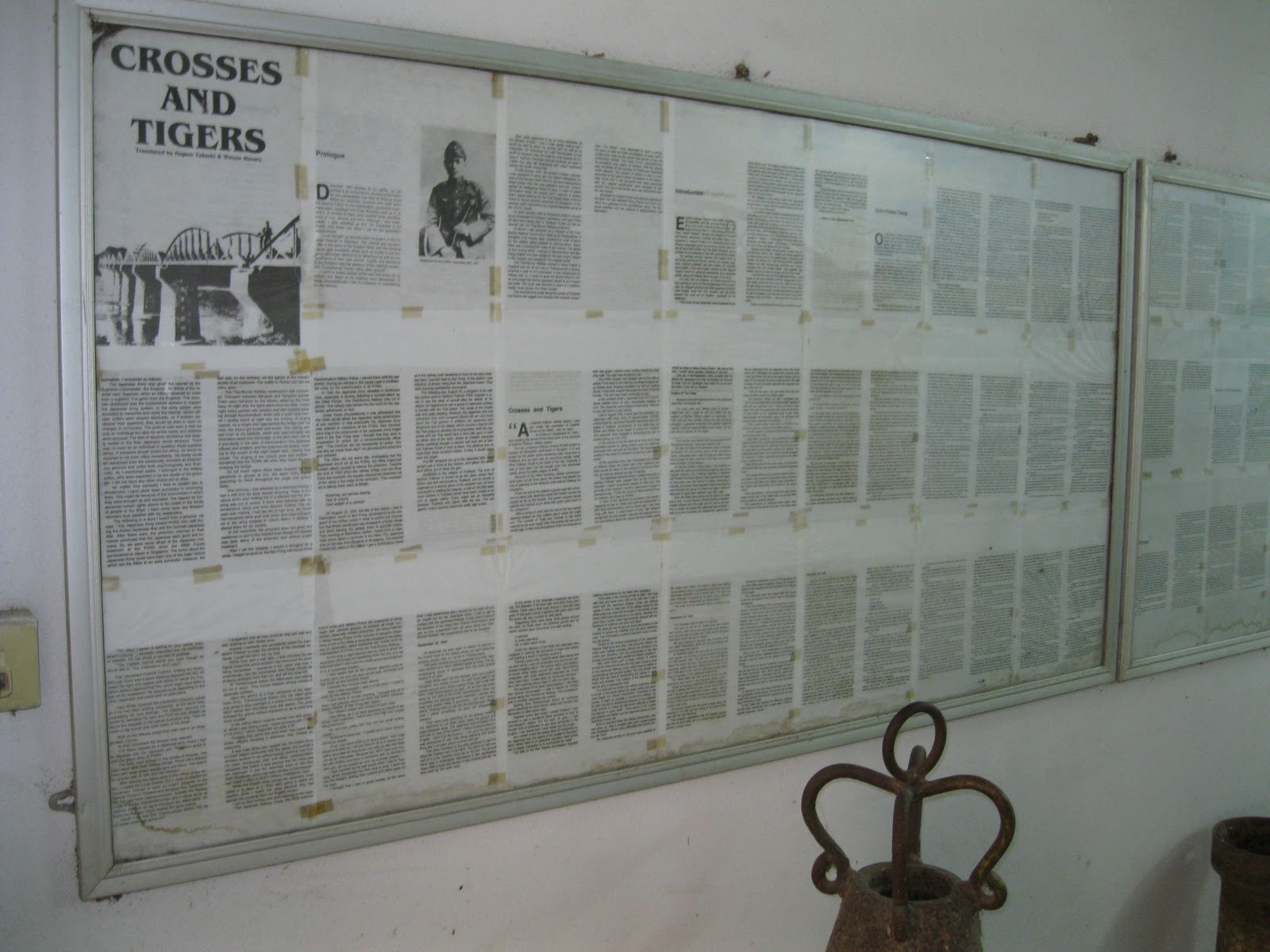
For our first touristy adventure day we hired bikes and rode around the historic sites, museums and markets of Kanchanaburi … and got a tad lost. Nothing we couldn’t get out of! There were times when we almost found ourselves on major roads, so we’d get off and push our bikes and ourselves to safety. First stop was The Bridge over the River Kwai. Walking along this knowing how it came to be there was quite surreal. To get a little more background we headed to the museum but ended up going to the wrong one – there are two! One closer to the Station and one called The World War II Museum near the bridge. I’ve posted some photos so you can see the standard of the one not to go to, unless of course to see the funny side. The interpretation consisted of newspaper and magazine articles from the time and later posted on the walls and the displays were badly kept. I still felt sick afterwards though so still very evocative and it wasn’t the strawberry iced shake! It didn’t take us long to realise that the Thai people don’t ever miss an opportunity to sell you something. At every attraction or tour bus destination/stop there’s a market, so you end up seeing the same stuff over and over again, but sometimes in a different pattern or colour if you’re lucky.

The Bridge over the River Kwai

World War II Museum

World War II Museum


The Kanchanaburi War Cemetery is the most well-kept cemetery I’ve been to. There looked to be a full time person working on new projects and two others sweeping tombstones and watering the grounds. A Thai man approached me at the cemetery and asked to take his photo. After more talking I found out he was a reverend at a Christian School further north and said if I’m ever back to go there to work at his school, he has lots of volunteers from New Zealand. He had a business card and I’ve checked out his website, so it’s legit. Opposite the cemetary is where we found the museum we should have visited, but think I’ll save that for another day. 

Kanchanaburi War Cemetery

We thought we’d head down to see what else was in Kanchanaburi because it seems where we’re staying is the new part and more for tourists than locals. Well, we didn’t see another white person for about an hour. We stopped at what must have been the local food market selling all sorts of things in bags and bottles I couldn’t identify as well as things I could; an array of fruits and seafood and meats on ice.

Local market

Local market


After much contemplation we decided to do the tour that encompassed everything. Ewaran National Park, Elephant trekking and bathing, the Death Railway and The Bridge over the River Kwai. The National Park boats a spectacular 7 tier waterfall. We walked to the 5th waterfall and then headed back down otherwise they’d be no time for a swim. We’d been warned about the fish that nibble on your feet at the waterfalls and I was dying for a swim so thought I’d be able to handle it. Clearly not! I jumped in and then jumped back out. I thought they’d be small, but some were larger than trout and I didn’t want to tempt them! 
Carol at the Erawan Waterfalls

The elephant trekking and bathing wasn’t what we expected and our elephant ‘driver’ didn’t speak English so it was hard to get an understanding of how the elephants live and are treated at the camp. After bathing with her in the river we went for a trek around an area that had been well used. Part way through the trip our ‘driver’ started singing to her and she’d reply with a growly sort of purr. That gave us reassurance that they’re happy. She was just beautiful and so gentle.

Elephant trekking

Hanging with the elephant

Bathing the elephant, or maybe the elephant's bathing us!

We arrived at part of the Death Railway and what do you know another market. We walked along part of the railway that built by Prisoners of War and also entered a cave that was used as a small hospital during the period of construction. On the drive back we saw the result of a car accident and it didn’t surprise me after being witness to the way our minibus driver handled the roads! In some parts we’d be on the wrong side of the road for hundreds of metres, just because. Traffic on the other side of the road doesn’t stop them from passing and the on coming traffic just moves right over. Strangely I felt very safe. 

We had a beer when we got back and did some planning for the next leg – Cambodia. At dinner I was eager to try the spicy papaya salad I’d heard to much about. We went to a place the Lonely Planet recommended as the best vegetarian menu in Kanchanaburi. I asked for medium and it was manageable, but hotter than I am used to. When it arrived I also realised it was a cold salad (it came with noodles and vegetable so I assumed it would be cooked first). So it was everything I should avoid; a salad because they wash the ingredients in local water and chilli which doesn’t always agree with me. Watch this space!